
Real Estate CRM: The Smarter Way to Manage Leads, Follow-Ups, and Sales Growth
A real estate CRM keeps every lead visible, every follow-up on time and every deal moving. What it is, why property teams need one, and what to look for.
Abhishek · · 6 min read
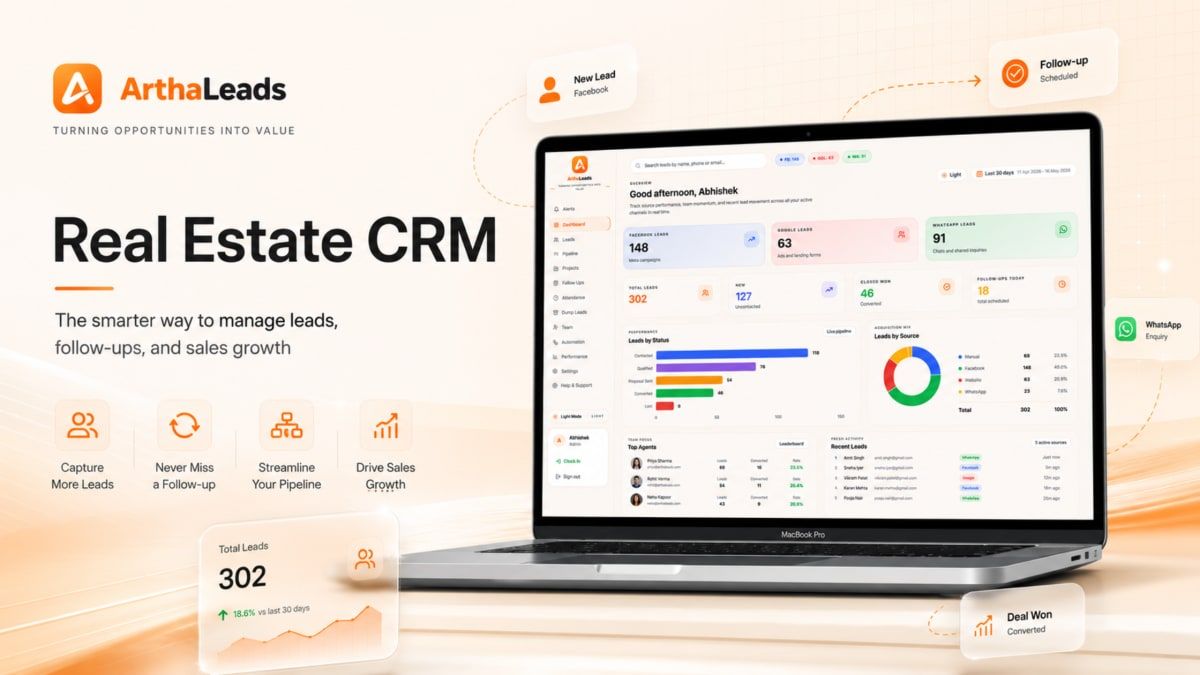
In real estate, every lead carries potential. But potential alone does not create revenue.
A buyer inquiry from a website, a WhatsApp message, a walk-in lead, a broker referral, or a Facebook ad response can easily turn cold if it is not tracked, assigned, followed up, and nurtured at the right time.
That is where a real estate CRM becomes essential.
A good CRM helps real estate sales teams bring order to fast-moving pipelines. It keeps every lead visible, every follow-up on time, and every sales opportunity connected to a clear next step.
For modern property teams, a CRM is no longer just a database. It is the operating system for sales growth.
What Is a Real Estate CRM?
A real estate CRM is software designed to help property developers, brokers, channel partners, and sales teams manage leads, customer conversations, site visits, follow-ups, bookings, and sales performance in one place.
Instead of depending on spreadsheets, scattered calls, manual reminders, or personal WhatsApp chats, a CRM gives your team a structured way to manage the complete buyer journey.
From the first inquiry to final conversion, every interaction stays organised.
Why Real Estate Teams Need a CRM
Real estate sales move fast. Leads often come from multiple sources at the same time, including:
- Google Ads
- Facebook and Instagram campaigns
- Property portals
- Website forms
- Walk-ins
- Referrals
- Channel partners
- Outbound calling
- WhatsApp campaigns
Without a central system, teams lose visibility. Managers do not know which leads are active. Sales executives forget follow-ups. Hot prospects go cold. Marketing teams cannot see which campaigns are actually generating quality leads.
A CRM for real estate solves this by creating one clear view of the entire sales pipeline.
Key Benefits of Using a Real Estate CRM
1. Capture Every Lead in One Place
A CRM helps you collect leads from different channels and store them in a single dashboard. This reduces manual entry, avoids duplication, and ensures no inquiry is missed.
When every lead is captured properly, your team can respond faster and work with better context. Our step-by-step guide to real estate lead management shows how to set this up, from the first enquiry to the site visit.
2. Improve Follow-Up Discipline
In property sales, timing matters.
A buyer may be comparing multiple projects. A delayed follow-up can mean losing the opportunity to another developer or broker. Often the first reply goes out on WhatsApp, and our guide on replying to property enquiries on WhatsApp covers what that first message should say.
With CRM-based reminders, task assignments, and follow-up tracking, your team always knows who to call, when to call, and what to discuss next.
Every lead, tracked. Every follow-up, on time.
3. Give Managers Better Pipeline Visibility
Sales managers need more than daily verbal updates. They need clear data.
A good CRM shows how many leads are new, contacted, qualified, scheduled for site visits, under negotiation, or converted. This makes it easier to identify bottlenecks, coach team members, and forecast revenue more accurately.
Better visibility leads to better decisions.
4. Reduce Lead Leakage
Lead leakage happens when inquiries are missed, delayed, duplicated, or left without ownership.
For real estate teams spending heavily on advertising, this can directly affect return on investment.
A CRM reduces leakage by ensuring every lead has a status, owner, source, activity history, and next action.
5. Track Source Performance
Not all lead sources perform equally.
Some campaigns may generate high lead volume but poor conversion. Others may bring fewer leads but better-quality buyers.
A real estate lead management CRM helps teams understand which sources are creating real sales opportunities. This allows marketing and sales teams to invest in what works.
6. Make Sales Teams More Productive
A CRM removes repetitive manual work from the sales process.
Instead of searching through notes, spreadsheets, and call logs, sales executives can quickly see lead details, past conversations, upcoming tasks, and current status.
Less chasing. More closing.
Features to Look for in a Real Estate CRM
When choosing a CRM for your real estate business, look for features that support actual sales workflows, not just contact storage.
Important features include:
- Lead capture from multiple sources
- Lead assignment and ownership
- Follow-up reminders
- Pipeline tracking
- Call and activity history
- Site visit management
- Campaign source tracking
- Team performance dashboards
- WhatsApp or communication integrations
- Role-based access for managers and executives
- Mobile-friendly access
The best CRM should feel simple to use but powerful enough to support serious sales operations. You can see how these map to Arthaleads on our features page.
How a CRM Helps Convert More Real Estate Leads
Conversion does not happen by accident. It happens when the team follows a clear process.
A real estate CRM helps convert more leads by making sure:
- New inquiries are contacted quickly
- Interested buyers are prioritised
- Follow-ups happen consistently
- Site visits are scheduled and tracked
- Managers can intervene before deals go cold
- Marketing sources are measured properly
- Sales teams stay accountable
When the process becomes visible, performance improves.
Real Estate CRM vs Spreadsheet: Why It Matters
Many real estate teams start with spreadsheets. They are familiar, flexible, and easy to create.
But as the team grows, spreadsheets become harder to manage.
- They do not send reminders.
- They do not show live pipeline status.
- They do not prevent duplicate leads.
- They do not track conversations properly.
- They do not give managers real-time visibility.
A CRM replaces scattered tracking with a structured sales system. It gives your team clarity, accountability, and momentum.
Why ArthaLeads Is Built for Real Estate Sales Teams
ArthaLeads is built for real estate teams who move fast and need a CRM that moves faster.
It helps teams manage leads, track follow-ups, monitor pipeline movement, and focus on the opportunities that matter most. The goal is simple: help every lead move closer to value.
With ArthaLeads, sales teams get a cleaner, warmer, and more efficient CRM experience designed around real estate workflows.
Because every lead deserves attention.
And every opportunity deserves to become value.
Conclusion
Real estate sales depend on speed, consistency, and visibility.
A real estate CRM helps teams manage leads better, follow up faster, reduce leakage, and improve conversions. It gives sales managers the control they need and gives executives the clarity they need to act.
For teams that want to grow without losing opportunities, a CRM is not optional anymore.
It is the foundation of a stronger sales pipeline.
ArthaLeads: Turning Opportunities into Value.
Book a demo with ArthaLeads and see how your team can turn more leads into value, compare plans and pricing, or start a free trial.
More guides on the Arthaleads blog · Arthaleads features · Pricing